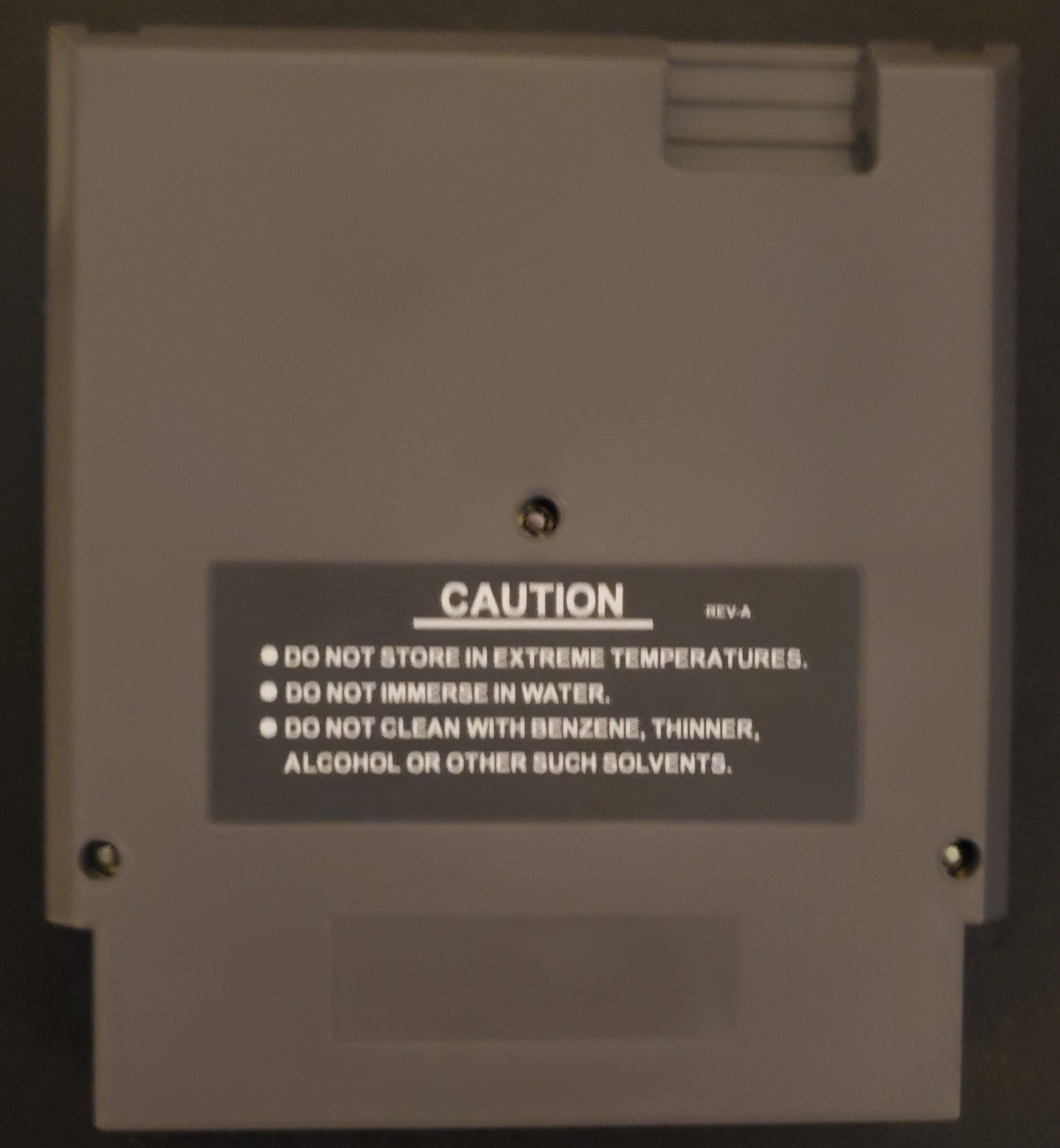


Little Samson NES Video Game Nintendo Entertainment System 1992
Little Samson NES Video Game Nintendo Entertainment System 1992
Couldn't load pickup availability
NES non oem reproduction Little Samson video game cartridge.
Little Samson is a critically acclaimed 1992 action-platform video game developed by Takeru and published by Taito for the Nintendo Entertainment System (NES). Released late in the console's lifecycle, it is widely considered a "hidden gem". It boasts exceptional 8-bit visual production and complex multi-character mechanics akin to the Mega Man or Castlevania III franchises. Today, it is famous for being one of the rarest, most expensive "holy grail" games for retro collectors. Original loose cartridges frequently sell for over $2,000
Gameplay Mechanics
The definitive feature of Little Samson is the ability to switch seamlessly between four distinct heroes at any time during a level. Each hero possesses their own health pool, movement properties, and specific weapon capabilities:
- Little Samson: The human protagonist. He is the most well-rounded hero, capable of jumping high, climbing walls/ceilings, and throwing straight-flying bells.
- Kikira the Dragon: A creature who can fly/hover for several seconds. She shoots arcing fireballs that can be charged up for massive damage.
- Gamm the Golem: A slow, heavy rock monster with massive health. He punches in four cardinal directions and can safely walk across deadly spike pits.
- K.O. the Mouse: A tiny, fragile mouse with a miniscule life bar. He moves exceptionally fast, fits into secret crevices, and deploys high-damage time bombs.
Story and Structure
The game follows four heroes summoned by the King of Forgy to defeat Ta-Keed, the Prince of Darkness, who has broken free from his magical seal.
- Tutorial Stages: The game kicks off with four optional introductory levels. Players play one mandatory level for each individual hero to learn their distinct movement properties before the team unites.
- Level Progression: Players tackle branching pathways over roughly 15 to 17 stages. Stages are carefully designed around puzzle-platforming elements, forcing players to frequently switch characters to survive.
- Dynamic Audio: Instead of tracks matching the environments, each hero brings their own unique, catchy background theme song that changes dynamically whenever you swap characters.
If you have any questions, please let me know!
Thanks for checking out my listing.
Shipping and Return
Shipping and Return
For checking shipping and return information, please check our shipping policy & return and refund policy.